
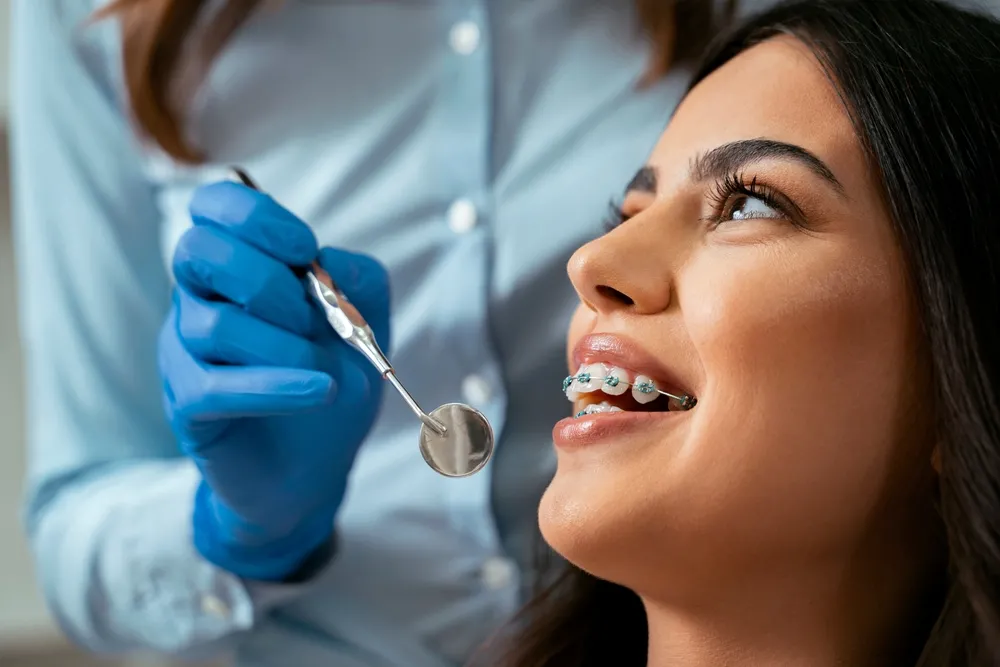
Traditional braces treatment typically takes 18 to 24 months for most patients. Mild cases with minor crowding may finish in 12 months, while complex bite corrections can extend to 30 months or longer. Your timeline depends on case severity, age, and how closely you follow care instructions.
Your orthodontist determines your specific treatment length after a thorough free consult. This includes X-rays, photos, and a detailed exam of your teeth and jaw. Once Dr. Kent and Dr. Tagerman review your diagnostic records, they'll map out personalized treatments for every lifestyle with realistic timing expectations. Carolina Braces in Indian Land makes finding your timeline easy, and the path to a straighter smile a whole lot more enjoyable.
Here's what shapes your timeline: the severity of your alignment issues, your age, and how closely you follow care instructions. After your braces come off, you'll enter a retention phase where retainers keep your teeth in their new positions.
How Long Does Traditional Braces Treatment Take Through Each Phase?
Traditional braces treatment moves through distinct phases, each playing a specific role in creating your new smile. Knowing what happens at each stage helps you understand what to expect along the way.
What Happens at the Consultation and Initial Evaluation?
Your treatment starts with a free consult at our Indian Land office. During this visit, our doctors examine your teeth, take X-rays, and capture photos of your smile from multiple angles. These records help our team identify exactly what needs to move and how.
You'll discuss your goals and learn which approach from our treatments for every lifestyle fits your situation best. This is also when you'll get a realistic estimate of how long your treatment will take.
What Is the Bonding Appointment?
Once you're ready to get started, the bonding appointment typically takes one to two hours. Our doctors attach brackets to each tooth using a special adhesive, then thread an archwire through the brackets. This wire applies gentle pressure that gradually shifts your teeth.
The process isn't uncomfortable for most patients, though your teeth may feel sore for a few days afterward as they begin adjusting to the new pressure.
What Happens During the Active Treatment Phase?
This is where the real work happens. You'll visit our office every four to eight weeks for adjustment appointments. During these visits, our experienced orthodontists with specialty training in orthodontics:
- Replace or tighten archwires
- Add elastics or other appliances as needed
- Monitor tooth movement progress
- Make modifications to keep treatment on track
Each adjustment brings your teeth closer to their final positions. Staying consistent with these appointments keeps your timeline from stretching longer than necessary.
What Is the Detailing Phase?
Near the end of your active treatment, fine-tuning becomes the focus. This phase addresses small details like perfecting tooth rotations, closing tiny gaps, and making sure your bite fits together properly.
The detailing phase can take several months, but it's what creates that polished final result.
What Happens on Debonding Day?
This is the day you've been working toward! Removing braces takes about an hour. Each bracket is carefully removed and any remaining adhesive is cleaned from your teeth. You'll have final photos and impressions taken to document your results, and many patients celebrate with a de-band party photo to mark the occasion.
Why Is the Retention Phase Important?
Teeth want to drift back toward their original positions. Retainers prevent this from happening. Most orthodontists recommend wearing retainers full-time at first, then switching to nighttime wear indefinitely.
According to the American Association of Orthodontists, retainer wear is essential for maintaining orthodontic results long-term. Skipping this phase can undo months of progress.
Why Is Traditional Braces Treatment Worth the Time?
Spending 18 to 24 months in braces delivers benefits that last a lifetime! Traditional braces handle complex cases that other options simply can't address as effectively, and the payoff makes every adjustment appointment feel worthwhile.
Metal braces give our doctors precise control over tooth movement, leading to strong, predictable outcomes. They can correct severe crowding, significant bite issues, and tougher rotations with reliable results. That predictability means fewer surprises along the way and a smoother experience for you.
Better oral health is another big win. Straight teeth are easier to brush and floss properly. When teeth overlap or crowd together, plaque builds up in hard-to-reach spots. Correcting alignment reduces your risk of cavities and gum disease, so you're investing in long-term health alongside aesthetics.
There's also the function piece. A properly aligned bite distributes chewing forces evenly across all your teeth. This protects individual teeth from excessive wear and can reduce jaw strain too.
And let's not forget lasting confidence. A straighter smile often changes how people feel about themselves. Many patients tell us they smile more freely after treatment. That confidence boost extends into social situations, photos, and professional settings.
Best of all? Results that hold. When you commit to wearing your retainers as directed, the results you achieve with braces stay with you. The time investment pays dividends for decades to come.
Traditional Braces vs. Invisalign Treatment Time
Both traditional braces and Invisalign can create beautiful smiles, but treatment timelines differ based on case severity and patient factors.
| Factor | Traditional Braces | Invisalign |
|---|---|---|
| Typical Duration | 18-24 months | 12-18 months |
| Best For | Severe cases, significant crowding, complex bite issues | Mild to moderate alignment concerns |
| Compliance Factor | Always working (fixed appliance) | Requires about 22 hours of daily wear |
| Adjustment Frequency | Every 4-8 weeks | Aligner changes every 1-2 weeks |
| Tough Rotations | Highly effective | May require attachments or longer treatment |
When braces work faster
For cases that involve significant bite correction, tooth rotations, or vertical movements, traditional braces often complete treatment more efficiently. The fixed brackets and wires apply continuous force without relying on patient compliance.
When Invisalign works faster
Mild crowding or spacing cases may finish sooner with Invisalign. However, this depends entirely on wearing aligners for the recommended hours each day. Patients who remove aligners frequently extend their treatment time.
The Carolina Braces advantage
Our doctors evaluate each case individually. During your free consult in Indian Land, you'll learn which option makes sense for your specific alignment needs and lifestyle. Dr. Kent, a platinum plus provider of Invisalign, offers expert guidance on both treatment paths. Our doctors are also active members of professional associations including the AAO, giving patients confidence in the quality of care they receive at Carolina Braces.
What Factors Influence Treatment Duration?
Your treatment timeline isn't random. Six main factors typically determine your timeline: case severity, patient age, compliance with care instructions, whether you need single-arch or full treatment, two-phase treatment timing, and unexpected setbacks like broken brackets. Each one can move your finish date earlier or later, so understanding them helps set realistic expectations.
How Does Case Severity Affect Timeline?
The biggest factor is what needs to be corrected. Consider these scenarios:
- Mild crowding or spacing: typically 12-18 months
- Moderate crowding with bite issues: typically 18-24 months
- Severe crowding, significant bite issues, or jaw discrepancies: typically 24-36 months
Overbites, underbites, and crossbites add layers to treatment. Each type requires specific tooth movements and sometimes jaw repositioning that takes time to achieve safely.
Does Patient Age Influence Treatment Time?
Teeth move differently depending on your age. Teen patients often complete treatment faster because their bones are still developing. Adult bone is denser and more set, which means teeth move more gradually.
This doesn't mean adults can't achieve excellent results. It simply means adult treatment may take a few months longer than the same case in a teenager.
How Does Compliance With Instructions Impact Treatment?
Our doctors can design the perfect plan, but results depend on your participation. Key compliance factors include:
- Attending all scheduled adjustment appointments
- Wearing elastics (rubber bands) as directed
- Avoiding foods that damage brackets
- Maintaining excellent oral hygiene
- Protecting braces during sports with a mouthguard
Missing appointments or repeatedly breaking brackets adds weeks or months to your timeline.
Is Single-Arch Treatment Faster Than Full Treatment?
Some patients only need correction on their upper or lower teeth. Single-arch treatment naturally takes less time than full-mouth correction. Our doctors determine whether single-arch treatment will achieve your goals or if both arches need attention.
What Is Two-Phase Treatment?
Younger patients sometimes benefit from early interceptive treatment around age 7, followed by a second phase during adolescence. Each phase has its own timeline, with a resting period between.
Can Unexpected Setbacks Extend Treatment?
Broken brackets, lost elastics, or poor oral hygiene can extend treatment. Each broken bracket means a repair appointment and potentially delayed progress. Taking care of your braces protects your timeline.
Who Is a Good Candidate for Traditional Braces?
Traditional braces remain a proven choice for many orthodontic cases at our Indian Land practice. You might be an ideal candidate if you have moderate to severe crowding, where teeth significantly overlap or twist. In those situations, braces provide the precise control needed to guide each tooth into position.
Spacing issues are another great fit. Gaps between teeth, whether from missing teeth or natural spacing, respond well to traditional braces treatment.
Bite issues like overbites, underbites, crossbites, and open bites often require the mechanical advantage that brackets and wires provide. These conditions affect how your teeth fit together when you close your mouth.
Some teeth need to rotate, tip, or move vertically, and braces excel at these precise movements. Tougher rotations and vertical shifts are exactly the kind of work braces handle best.
Finally, if you prefer a fixed option, braces deliver. Unlike Invisalign, you can't remove braces. For patients who prefer not worrying about wearing an appliance enough hours per day, this "always on" approach works well.
Traditional braces treat patients of all ages. Children as young as 7 may benefit from early evaluation, teens commonly get started with full treatment, and adults achieve excellent results too. At Carolina Braces in Indian Land, Dr. Kent and Dr. Tagerman, both with specialty training in orthodontics, create plans for everyone from kids to adults who want to achieve their perfect smile. Because everyone deserves a smile they love.
Frequently Asked Questions
Can braces work faster than 18 months?
Absolutely. Patients with mild crowding or minor spacing often complete treatment in 12 to 15 months. During your free consult at Carolina Braces in Indian Land, our doctors provide a realistic estimate based on your diagnostic records.
Do adults take longer than teens in braces?
Generally, yes. Adult bone density means teeth move more gradually compared to growing teens. The results, however, are equally excellent regardless of age.
How often are adjustment appointments?
Most patients visit every four to eight weeks during active treatment, with appointments lasting roughly 15 to 30 minutes. Our doctors tighten wires, replace elastics, and monitor your progress at each visit.
What happens if I miss appointments?
Missed appointments extend your treatment time. When you skip or delay visits, your teeth aren't progressing. Multiple missed appointments can add weeks or even months to your overall timeline.
How long is the retention phase?
Retention typically lasts indefinitely, with full-time wear for the first several months after braces removal, followed by nightly wear after that. Skipping this phase risks losing the alignment you worked so hard to achieve.
Will I need rubber bands, and do they affect treatment time?
Many patients wear elastics (rubber bands) to correct bite alignment, and wearing them exactly as directed is critical. Patients who skip elastics or wear them inconsistently often face extended treatment times.
If you'd like to learn more about how long traditional braces treatment might take for you, Carolina Braces in Indian Land offers a free consult where Dr. Kent and Dr. Tagerman evaluate your smile and outline treatments for every lifestyle.