
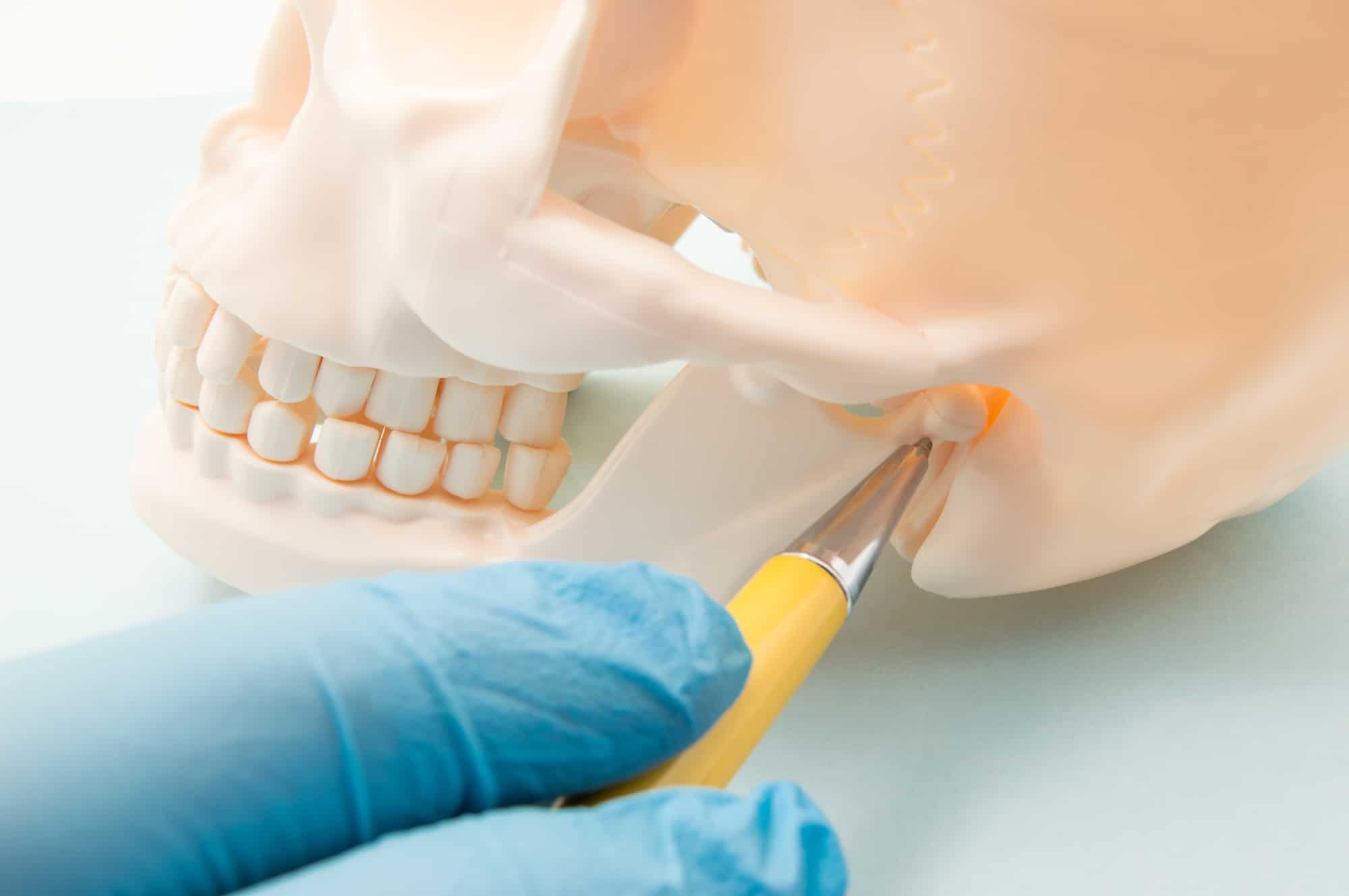
Jaw pain has a way of showing up everywhere. It's there when you bite into a sandwich, when you wake up with a headache, and when your jaw clicks during a meeting. For a lot of people in Raleigh, that pain gets brushed off for months because it comes and goes. This guide covers what TMJ disorder is, the symptoms worth paying attention to, the everyday habits that make it worse, and what an orthodontic evaluation for jaw pain looks like at Carolina Braces.
What TMJ and TMD Mean
TMJ stands for temporomandibular joint. You have two of them, one in front of each ear, and they connect your lower jaw to your skull. They work like hinges that also slide, which is why you can open, close, and move your jaw side to side to chew.
When the joint or the muscles around it are strained, inflamed, or out of balance, the problem is called temporomandibular disorder, or TMD. Most people just say "TMJ" for both the joint and the condition, so we'll do the same here.
For some people, TMJ pain is short-lived and fades on its own in a few weeks. For others it lingers for months or keeps coming back. Either way, pain that changes how you eat, sleep, or talk deserves a closer look.
Symptoms of TMJ Disorder
TMJ symptoms vary a lot from person to person. Some people only feel it when they chew. Others have a dull ache all day. Common signs include:
- Pain or tenderness in the jaw, especially near the ear
- Clicking, popping, or grating sounds when you open or close your mouth
- Trouble opening your mouth fully, or a jaw that catches or locks
- Headaches, often at the temples, that seem tied to jaw tension
- Earaches or a feeling of fullness in the ear with no ear infection
- Sore jaw muscles in the morning, which can point to clenching or grinding at night
- A bite that suddenly feels "off" when your teeth come together
Clicking on its own, without pain or limited movement, is common and isn't always a problem. Pain, locking, or a jaw that won't open normally is a different story and is worth having checked.
What Causes Jaw Pain and TMJ Problems
TMJ disorder rarely has a single cause. More often it's a mix of factors that add up over time:
- Clenching and grinding (bruxism). Many people grind their teeth in their sleep without knowing it. The constant pressure tires the jaw muscles and loads the joint.
- Stress. Tension tends to land in the jaw, neck, and shoulders, often without you noticing.
- A misaligned bite. When teeth don't meet evenly, the muscles and joints work harder to bring them together every time you chew or swallow.
- Injury. A hit to the jaw or face can damage the joint or the disc that cushions it.
- Arthritis. Osteoarthritis and rheumatoid arthritis can both affect the jaw joint.
Because other problems, like sinus issues, ear infections, or a toothache, can feel a lot like TMJ, an exam matters. Guessing at the cause can lead to the wrong fix.
Everyday Habits That Make TMJ Worse
Daily habits play a bigger role than most people expect. Chewing gum, biting your nails, chewing on pens, sleeping on your stomach, and slouching over a phone or laptop all add strain to the jaw. Hard or chewy foods like bagels, tough meat, and raw carrots can flare a sore joint too. We cover the full list, with practical swaps for each one, in our post on 8 things that make TMJ worse.
If you're trying to sort out where your pain is coming from in the first place, five common jaw pain causes is a good next read.
Simple Things to Try at Home
While you wait for an appointment, a few low-risk steps may ease mild symptoms:
- Eat softer foods for a few days and cut food into small pieces
- Skip gum and avoid opening your mouth very wide, like big yawns or large bites
- Apply a warm compress to sore jaw muscles
- Notice when you clench during the day and let your teeth rest slightly apart
- Sleep on your back with good neck support instead of on your stomach
These steps can calm a flare, but they don't fix a bite problem or nighttime grinding. If your symptoms keep returning, it's time for an evaluation.
How an Orthodontist Evaluates Jaw Pain
Orthodontists study how teeth, jaws, and the muscles that move them fit together, which makes them a natural fit for bite-related jaw pain. At Carolina Braces, an evaluation for TMJ starts with three things:
- A review of your medical and dental history, including when the pain started and what makes it better or worse
- A physical exam that checks for tenderness, clicking, and how far and how smoothly your jaw opens and moves
- Imaging, such as X-rays or digital scans, to look at the structure of your jaw and how your teeth meet
The goal is to find the source of the pain before recommending anything. A sore jaw from nighttime grinding needs a different plan than a sore jaw from a crossbite.
Treatment Options for TMJ in Raleigh
Most TMJ cases respond to conservative care, and that's where Carolina Braces starts. Depending on what the evaluation finds, a plan may include:
- A custom night guard to protect your teeth from grinding and take pressure off the joint while you sleep
- Orthodontic treatment with braces or Invisalign when a misaligned bite is part of the problem
- Lifestyle changes such as stress management, jaw exercises, and posture work
- Short-term anti-inflammatory medication in some cases, as part of a larger plan
Night guards often bring relief within a few weeks. Bite correction with braces or aligners takes longer but addresses the alignment issue behind the strain. You can read more about each option, along with cost and financing details, on our TMJ treatment page.
Some patients with bite and jaw muscle problems are also candidates for myocentric orthodontic treatment, which focuses on getting the teeth, jaw joints, and muscles working in balance.
TMJ, Headaches, and Sleep
Jaw tension doesn't stay in the jaw. Tight chewing muscles can refer pain to the temples, forehead, and neck, and many people with TMJ trouble also deal with frequent tension headaches. If headaches are your main complaint, our post on how orthodontics can help with chronic headaches and jaw pain goes deeper on that link.
Grinding at night can also mean poorer sleep, which can make pain feel worse the next day. Treating the grinding may help both.
When to Book a Visit
Schedule an evaluation if you notice any of the following:
- Jaw pain that lasts more than a couple of weeks or keeps coming back
- A jaw that locks open or closed, or won't open as far as it used to
- Pain while chewing that's changing what you eat
- Morning jaw soreness or headaches that point to grinding
- A bite that feels different than it used to
If you've had a recent injury to your face or jaw, see a medical provider right away.
Get Help for Jaw Pain at Carolina Braces
Dr. Robert Kent and Dr. Samantha Tagerman see patients with jaw pain, clicking, and bite problems at Carolina Braces in Raleigh. Your first consultation is free, and you'll leave knowing what's likely behind your symptoms and what your options are. Book a free consultation or learn more about our approach to TMJ treatment in Raleigh, NC.